Hyaluronic acid dermal filler · Malaysia

Filler isn’t the treatment plan.Your face is.

At Agness Clinic in Malaysia, hyaluronic acid dermal filler is used as one of the tools for facial contouring, structural support and feature refinement. Treatment begins with understanding the face — not chasing trends.

The material

What is Hyaluronic Acid Dermal Filler?

Illustration of hyaluronic acid naturally present in facial tissue, shown with a molecular detail

01 — Natural HA

HA already exists naturally in our body.

Hyaluronic acid is naturally found throughout the body, helping tissues retain water and supporting functions such as joint lubrication.

Learn more

What does HA do in our body?

HA is one basic molecule, but it can exist as chains of different lengths. These differences can influence how it behaves in our tissues.[1]

Skin hydration

HA helps attract and retain water, supporting the skin’s hydration and the environment surrounding skin cells.[2]

Tissue support

HA is part of the extracellular matrix — the natural environment that surrounds and supports our cells. It works alongside other components, including collagen and elastin, to help maintain healthy tissue.[3]

Changes with ageing

As we age, the amount, distribution and behaviour of HA in our skin can change.[2]

These changes occur alongside changes in collagen, fat and facial support structures.

Natural HA helps maintain the skin’s environment, but it is not the same as an injectable dermal filler.

Scientific references

  • Read scientific reference ↗Physiochemical properties and application of hyaluronic acid: a systematic review — Journal of Cosmetic Dermatology, 2016 · DOI: 10.1111/jocd.12237
  • Read scientific reference ↗Hyaluronic acid: A key molecule in skin aging — Dermato-Endocrinology, 2012 · DOI: 10.4161/derm.21923
  • Read scientific reference ↗Hyaluronic acid: comprehensive review of a multifunctional biopolymer — Future Journal of Pharmaceutical Sciences, 2024 · DOI: 10.1186/s43094-024-00636-y
Illustration of a sterile injectable hyaluronic acid dermal filler gel

02 — Formulated filler

Dermal filler is engineered to behave differently.

HA dermal filler is a specially formulated sterile gel designed to remain in tissue and provide effects such as support, shaping, projection or contouring.

Learn more

How does natural HA become dermal filler?

Natural HA is continuously broken down and replaced by our body. To make it suitable for dermal filler, manufacturers process and formulate HA into a sterile injectable gel.

Many HA fillers use cross-linking, which connects HA chains to help the gel maintain its structure and remain in tissue for longer.[1]

The manufacturing process influences how the gel flows, holds its shape and responds to pressure. This allows different HA fillers to be designed for different treatment purposes.[2]

HA dermal fillers are manufactured as medical products and are subject to the regulatory requirements of the market in which they are supplied.

The formulation — not simply the fact that it contains HA — helps determine what a filler can do.

Scientific references

  • Read scientific reference ↗A Review of the Metabolism of 1,4-Butanediol Diglycidyl Ether–Crosslinked Hyaluronic Acid Dermal Fillers — Dermatologic Surgery, 2013 · DOI: 10.1111/dsu.12301
  • Read scientific reference ↗Rheologic and Physicochemical Properties Used to Differentiate Injectable Hyaluronic Acid Filler Products — Plastic and Reconstructive Surgery, 2019 · DOI: 10.1097/PRS.0000000000005429
Illustration of three hyaluronic acid gel forms labelled Soft, Flexible and Firm on a reflective champagne platform

03 — Material behaviour

This is where engineering matters.

HA fillers are not all designed to behave the same way. Some are softer, some adapt more easily to movement, while others are firmer and provide greater support.

Learn more

Why does filler behaviour matter?

Different areas of the face need different kinds of support. This is why choosing the right filler matters just as much as choosing where to place it.[2]

Soft

Designed to integrate gently into tissue for subtle refinement.

Best suited to delicate refinement.

A softer gel may be selected when the goal is to soften selected fine lines or enhance delicate areas without creating excessive projection.[2]

Flexible

Designed to adapt to facial movement while maintaining a natural shape.

Moves naturally with your expressions.

Flexible fillers may be useful in areas that move frequently, such as the lips, where the gel needs to accommodate movement while maintaining the intended shape. Selecting a product according to its physical properties and clinical application helps support a natural-looking outcome.[2]

Firm

Designed to resist deformation and provide greater structural support.

Provides support where definition is needed.

Firmer fillers may be selected when the treatment requires projection, contouring or structural support, such as selected areas of the chin, jawline or cheek. Greater resistance to deformation can help the gel maintain its shape in areas that need more support.[2]

How well a gel holds together can also influence how it distributes in tissue and supports natural-looking contours.[3]

Soft, flexible and firm are simplified descriptions, not official filler categories. A product’s actual behaviour depends on its formulation, and the appropriate choice also depends on facial anatomy, treatment objective and injection plane.

Scientific references

  • Read scientific reference ↗Rheologic and Physicochemical Properties Used to Differentiate Injectable Hyaluronic Acid Filler Products — Plastic and Reconstructive Surgery, 2019 · DOI: 10.1097/PRS.0000000000005429
  • Read scientific reference ↗Cohesivity of Hyaluronic Acid Fillers: Development and Clinical Implications of a Novel Assay, Pilot Validation with a Five-Point Grading Scale, and Evaluation of Six U.S. Food and Drug Administration-Approved Fillers — Plastic and Reconstructive Surgery, 2015 · DOI: 10.1097/PRS.0000000000001638

Not all HA behaves the same.

How an HA filler is formulated affects how soft, flexible or firm it behaves once placed in tissue.

This behaviour is known as rheology.

Same material. Different behaviour under pressure.

The advantage of HA

Designed to be “reversible”.

HA filler can be dissolved with hyaluronidase. The breakdown process can begin within minutes.

Hyaluronidase is an enzyme that breaks down hyaluronic acid. It allows a doctor to reduce or dissolve unwanted HA filler when medically appropriate.

The time needed for visible or complete correction varies depending on the filler, its formulation, location and the amount being treated. Some cases require more than one treatment.

This reversibility gives HA filler an important advantage: the ability to reassess, adjust and, when appropriate, remove existing filler before rebuilding.

Scientific references

  • Read scientific reference ↗Comparison of Hyaluronidase-Mediated Degradation Kinetics of Commercially Available Hyaluronic Acid Fillers In Vitro — Aesthetic Surgery Journal, 2024 · DOI: 10.1093/asj/sjae027
  • Read scientific reference ↗The Kinetics of Reversible Hyaluronic Acid Filler Injection Treated With Hyaluronidase — Dermatologic Surgery, 2017 · DOI: 10.1097/DSS.0000000000001084
  • Read scientific reference ↗Effectiveness of Low Doses of Hyaluronidase to Remove Hyaluronic Acid Filler Nodules: A Randomized Clinical Trial — JAMA Dermatology, 2018 · DOI: 10.1001/jamadermatol.2018.0515

So where does HA filler fit into facial treatment?

Within our 4-step approach, HA filler can be used in Lift, Contour and Refine — while Tightening relies on other treatment technologies.

Depending on the treatment objective, HA filler may also be combined with Ellansé for selected structural support and contouring, or Sculptra for gradual collagen stimulation.

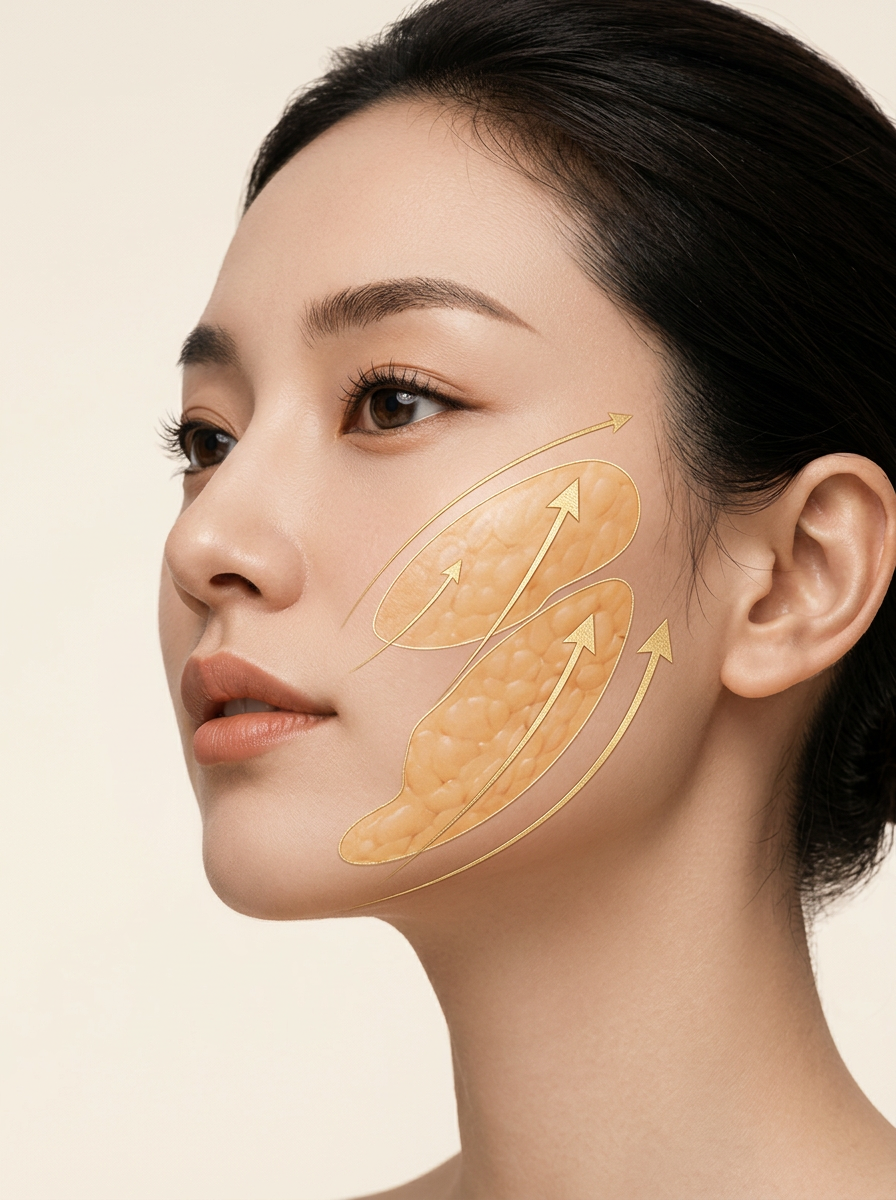
  1. Lift — step 01 of the Agness 4-step method
    HA FILLER

    Lift

    Restore structural support.

  2. Tighten — step 02 of the Agness 4-step method
    not treated with HA filler
    NO HA FILLER

    Tighten

    Improve skin firmness.

  3. Contour — step 03 of the Agness 4-step method
    HA FILLER

    Contour

    Shape and balance facial proportions.

  4. Refine — step 04 of the Agness 4-step method
    HA FILLER

    Refine

    Soften selected lines and enhance subtle details.

Treatment planning

Filler Gone Wrong? Why Some Results Look Unnatural

Poor filler results are rarely caused by one factor alone. A natural result depends on understanding the face, choosing the right filler, placing it correctly — and knowing when not to inject.

Great results don’t happen by chance. They follow the right process.

    • Clinical Experience

      Does your injector have enough clinical experience to understand facial anatomy, ageing changes, and what is actually causing your concern?

    • Treatment Objective

      Is the goal to lift, contour, refine, restore volume — or should existing filler be removed before adding anything more?

    • Choice of Filler

      Is the right filler chosen for what your face actually needs?

    • Accurate Placement

      Does your injector know exactly where and at which tissue layer the filler should be placed?

    • Amount

      How much filler is actually needed to achieve the intended result without overfilling?

    • Technique

      Does your injector have the technique and precision to deliver the intended result?

    • Aesthetic Judgement

      Does your injector have the sense of beauty to know what should be enhanced — and what should be left alone?

1 / 7

The goal

A natural result

that is right for you.

It’s never the product that cause the problem, it’s always the hand that injects.

Philosophy

Where you see the problem may not be where treatment begins.

What is visible is the starting point of the assessment — not automatically the site of treatment.

What would you like to enhance?

Explore how dermal filler can lift, contour and refine.

Facial areas where dermal filler may be used — forehead, temples, under-eye, aegyosal, cheek, nose, nasolabial region, lips, jawline and chin

Forehead

A smoother, fuller forehead for a softer, more youthful profile.

Frequently asked

Dermal filler, answered.

Common questions about hyaluronic acid filler within the Agnes Lift Method — how it works, how long it lasts, reversibility and natural-looking results.

Begin with a conversation

Start with an assessment.Not a syringe.

The appropriate treatment begins with understanding your facial structure, concerns and goals.